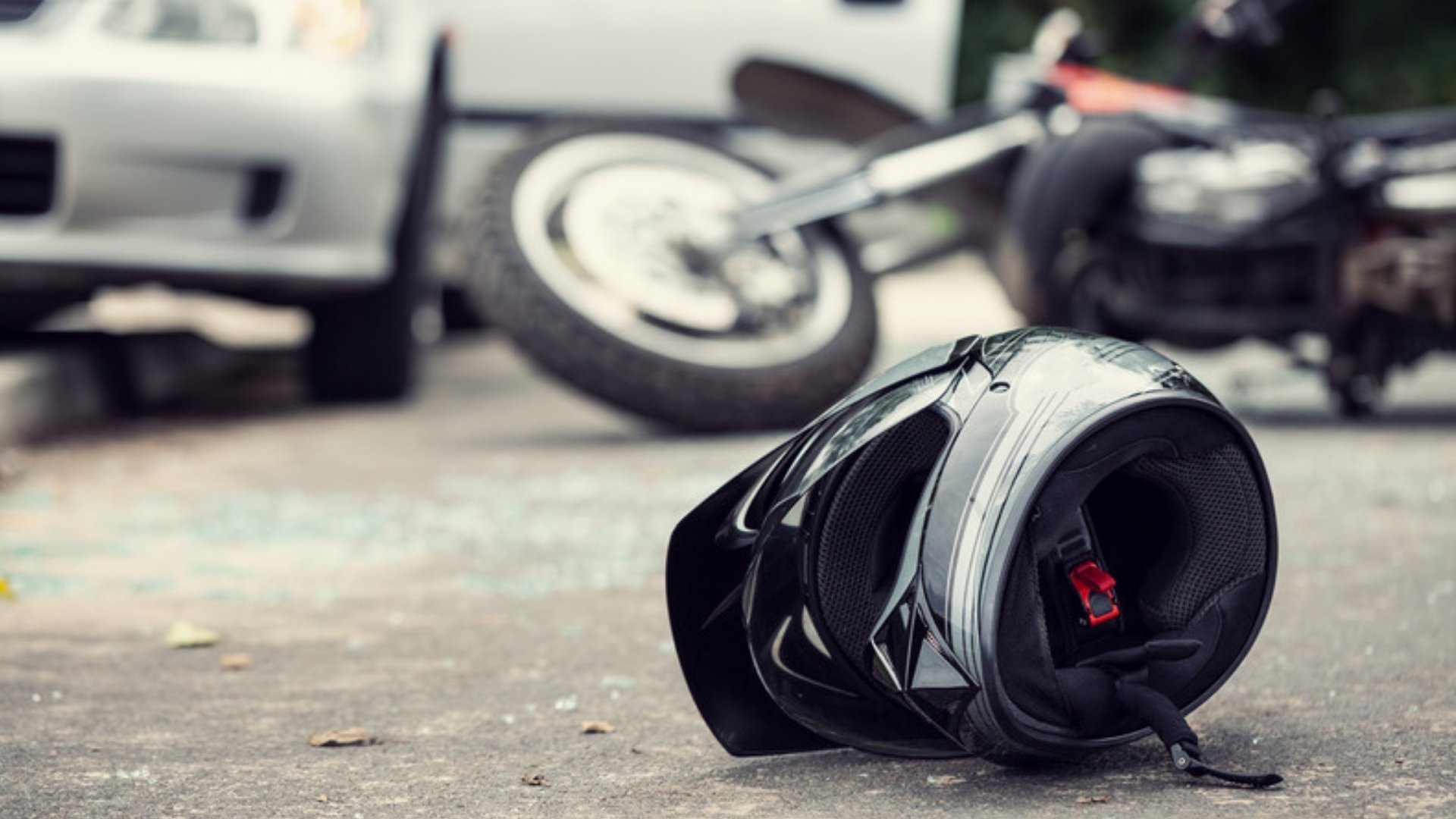
Yes. Riding without a helmet does not bar a Texas injury claim. You can recover if you were 50% or less responsible, minus your share. The insurer may argue a helmet would have reduced a head injury. A Fort Bend County motorcycle accident lawyer makes the defense prove that link with evidence, one injury at a time.
Lassiter Law Firm represents motorcycle riders and passengers hurt in crashes across Fort Bend County and the Houston area. The firm handles the insurance claim, the helmet dispute, and the lawsuit when one is needed. It has won over $300 million for its clients. Founder James Lassiter is Board Certified in Personal Injury Trial Law by the Texas Board of Legal Specialization.
If a driver hit you on a motorcycle anywhere in Fort Bend County, call Lassiter Law Firm at (832) 937-4381 for a free case review. The office answers 24/7, and the first conversation costs nothing.
Why a Fort Bend County Motorcycle Accident Lawyer Separates the Crash From the Injury
Every helmet dispute turns on two different questions. Who caused the crash? And who caused each injury? The motorcycle accident attorneys at Lassiter Law Firm keep those questions apart from the first phone call. A driver who turns left across your path on State Highway 6 caused that crash, whatever you wore on your head.
Texas law asks the second question directly. Civil Practice and Remedies Code Section 33.003 tells the jury to weigh each person’s share in causing “the harm for which recovery of damages is sought.” The harm is your injury, not the collision itself. TxDOT’s 2025 table of motorcyclist deaths and injuries by helmet use puts the point in numbers. Of 559 riders and passengers killed statewide, 359 were wearing helmets and 173 were not. A helmet did not keep those riders out of the crash. How much the helmet question affects your own claim depends on your injuries and the evidence, which a lawyer has to review.
What Texas Helmet Law Requires of Riders in Fort Bend County
Texas does not require every rider to wear a helmet. Transportation Code Section 661.003 makes it an offense to ride without approved headgear, then sets out an exception for adults. The headgear has to meet safety standards adopted by the Department of Public Safety. A violation is a misdemeanor with a fine of $10 to $50.
That fine is small, and the statute says nothing about fault in a crash. It also bars a peace officer from stopping or detaining a rider just to check whether the exception applies. None of this decides your injury claim. It does shape the arguments each side makes once a claim is open.
Riders and Passengers Under 21 Must Wear Approved Headgear
Under 21, the rule has no exception. Section 661.003(a) requires every operator and passenger to wear approved headgear on a public street or highway. Subsection (b) makes it a separate offense to carry a passenger who is not wearing one. So a 19-year-old riding on FM 1093 without a helmet was breaking the law, even when the other driver caused the crash. Expect that fact to come up, and expect your lawyer to address it early.
Riders 21 and Older Who Qualify for the Exception
Section 661.003(c) lets a rider who is at least 21 ride without a helmet in two situations. Either one is enough. One is a completed motorcycle operator training and safety course under Chapter 662. The other is a health insurance plan that pays medical benefits for motorcycle crash injuries. An officer may not ticket a qualifying rider who shows evidence of either one.
Adjusters ask for that proof, so keep it where you can find it after a crash.
- Keep your course completion certificate, or a clear photo of it, with your driver’s license.
- Carry your health plan card and any proof of coverage your insurer issues.
- Ask your health plan in writing whether it pays for injuries from a motorcycle collision.
- Save the plan’s written answer with your other insurance papers.
A rider who met the exception was riding legally. That takes away the defense’s easiest line, the claim that you broke the law that day.
Completing a Motorcycle Safety Course Under Chapter 662
The course option runs through a state program. Since September 1, 2020, Chapter 662 has placed the motorcycle operator training and safety program with the Texas Department of Licensing and Regulation. Section 662.0033 has that department approve the courses that meet its curriculum standards. Keep the completion card, because it is your evidence under Section 661.003(c).
Health Insurance That Covers a Motorcycle Crash
Section 661.003(i) defines a health insurance plan broadly. The definition reaches individual and group policies, health maintenance organization memberships, and employee benefit plans that pay for care after a collision. Many websites still quote a $10,000 coverage minimum, a figure from earlier versions of the law. The current text of Section 661.003 names no dollar amount. The real question is whether your plan pays for motorcycle crash injuries, and subsection (c-2) has the Texas Department of Insurance prescribe the standard proof.
Can the Insurer Blame Your Injuries on a Missing Helmet in Texas?
It can try. The opening came from a seat belt case. Before 2003, Transportation Code Section 545.413(g) kept seat belt evidence out of civil trials, and House Bill 4 repealed it that year. In Nabors Well Services v. Romero, decided February 13, 2015, the Supreme Court of Texas held that relevant evidence of whether a person wore a seat belt is admissible to apportion responsibility. The Court said the question “is not simply who caused the car accident, but who caused the plaintiff’s injuries.”
Nabors also set a limit that helps riders. The defense can show relevance only with evidence that going without the belt caused the injuries. The Court added that expert testimony will often be required. The opinion addresses seat belts and says nothing about helmets. Defense lawyers apply its reasoning to riders anyway, and Section 33.003 gives them the statutory hook. Whether the argument fits your case turns on your injuries and the medical proof, which a lawyer needs to review.
Injuries a Helmet Could Not Have Prevented
Start with where you were hurt. A helmet protects the head. It does nothing for a shattered pelvis, a broken femur, or a torn rotator cuff. Under Nabors, the defense has to tie the missing helmet to a specific injury before a jury can weigh it. In most claims, that limits the helmet argument to part of the damages, not all of them.
Fractures, Road Rash, and Spinal Cord Injuries
A rider thrown onto the pavement usually lands on a shoulder, hip, or knee. Fractures and road rash from that impact have nothing to do with headgear. Spinal cord injuries come from the twisting and compression of the fall, and the defense needs medical proof before it can connect them to a helmet. Without that proof, the helmet has no bearing on those damages.
Facial and Jaw Injuries
Face injuries sit in the middle. A full-face helmet covers the jaw. A half helmet does not. Suppose the defense says a helmet would have protected your face. It then has to show what kind of helmet you would have worn and what that helmet would have done. Those are factual questions a defense expert has to answer with evidence, and your lawyer gets to test each answer.
Head and Brain Injuries, Where the Helmet Fight Happens
A traumatic brain injury, or TBI, is where insurers press hardest. A concussion, a skull fracture, or bleeding on the brain is the harm a helmet is built to reduce. Even so, the defense still carries the burden Nabors describes. It has to show that a helmet meeting the state standard would have changed this injury, in this crash, at this speed. General statistics about helmets do not meet that burden on their own.
What a Defense Expert Has to Show
Speed, impact angle, and the point of contact all matter. A defense expert usually reconstructs the crash and your movement, then gives an opinion on what a helmet would have done. Your lawyer can test every assumption in that opinion. Nabors leaves relevance to the trial court, so the jury hears the opinion only after the judge finds it relevant.
Helmets That Fall Short of the State Standard
Some riders wear thin novelty helmets. Section 661.003 counts only headgear that meets the standards the Department of Public Safety adopts. Section 661.002 lets that department adopt standards from the American National Standards Institute. A crash report may still record a novelty helmet as worn, so expect the defense to raise the difference.
When the Helmet Came Off in the Crash
A helmet found on the road can leave doubt about whether it was on your head. The crash report’s helmet field lets an officer record a helmet as worn and damaged, worn and undamaged, or worn with damage unknown. Photographs, witness statements, and the helmet itself settle that question. Keep the helmet, and do not repair or throw it away.
Brain Injury Records From the Texas Medical Center
The state trauma list, current as of October 1, 2026, rates Memorial Hermann Sugar Land Hospital and OakBend Medical Center in Richmond as Level IV, the basic tier. The region’s adult Level I centers, Ben Taub Hospital and Memorial Hermann-Texas Medical Center, both sit in the Texas Medical Center. A serious head injury in Fort Bend County can mean a transfer or a flight to one of them. The scans and neurosurgery notes from that stay become the core evidence in any helmet dispute.
How Fault Percentages Change a Texas Motorcycle Recovery
Texas uses proportionate responsibility. Under Section 33.003, the jury assigns each party a percentage of responsibility in whole numbers. Section 33.012(a) then reduces your damages by your own percentage. Section 33.001 bars recovery entirely if your share is greater than 50%.
That bar is the real risk in a helmet case. A helmet argument usually reaches part of the harm, not all of it. Stacked with other claims about how you rode, though, it can push your share upward. Left-turn collisions show the pattern clearly, and the firm’s page on left-turn motorcycle crashes explains how fault gets proved there. How a jury might split responsibility in your crash depends on facts a lawyer has to review.
Adjusters often pair the helmet with arguments like these.
- They claim you were lane splitting, since Transportation Code Section 545.060 requires a driver to stay as nearly as practical within a single lane.
- They point to your speed, sometimes using only the damage to the bike as proof.
- They raise a missing Class M designation on your license, even when it had nothing to do with the crash.
- They cite dark clothing or the time of day and argue the driver could not see you.
Each argument needs evidence that it caused or contributed to the harm, the same test Section 33.003 applies to the helmet. Section 33.013(b) also makes a defendant found more than 50% responsible jointly and severally liable for the damages you can recover. That rule matters when a second driver or a trucking company shares the blame.
Who Writes the Crash Report in Fort Bend County, and What It Says About Your Helmet
The adjuster usually reads the crash report before calling you. In Texas, that is the CR-3, the Texas Peace Officer’s Crash Report. TxDOT’s 2025 instructions to officers require a helmet entry for every motorcycle rider and passenger. So the officer’s code follows you into every negotiation. Which agency writes the report depends on where the crash happened.
Inside Sugar Land, Missouri City, Rosenberg, or Richmond, the city police usually work the crash. In unincorporated Fort Bend County, a sheriff’s deputy or a Department of Public Safety trooper usually does. That includes the unincorporated stretches of the Grand Parkway. Parts of Houston also sit in Fort Bend County, and Houston police handle crashes there. Transportation Code Section 550.065 lets people directly involved buy a copy, and TxDOT’s Crash Report Online Purchase System charges $6, or $8 for a certified copy.
Reading the Helmet Code on Your CR-3
Version 29.0 of TxDOT’s Instructions to Police for Reporting Crashes lists six helmet codes for the CR-3. Five of them can appear for a motorcycle rider, and each one sends the adjuster in a different direction.
- Code 1 means the helmet was not worn.
- Code 2 means it was worn and damaged.
- Code 3 means it was worn and not damaged.
- Code 4 means it was worn, with damage unknown.
- Code 99 means the officer did not know whether it was worn.
A code 99, or a code 1 that is wrong, is worth fixing early. Officers fill in the report from what they see and hear at the scene, often before anyone finds a helmet in a ditch or an ambulance.
Fixing a Helmet Code That Is Wrong
The same manual tells officers to submit a supplement report when new information arrives after the original. So a correction goes through the agency that investigated the crash, not through TxDOT. Send that agency your photos, the witnesses’ names, and the helmet’s condition in writing, and keep a copy of everything. Even if the report never changes, that record gives your lawyer evidence to answer the code. The officer can also be questioned about the entry if the case goes to a deposition.
Where Fort Bend County Motorcycle Cases Are Filed and How Long You Have
Venue starts with geography. Civil Practice and Remedies Code Section 15.002(a)(1) puts a lawsuit in the county where all or a substantial part of the events happened. For a crash on Interstate 69 or US 90A inside the county, that usually means the Fort Bend County District Clerk. The office sits in the Fort Bend County Justice Center at 1422 Eugene Heimann Circle in Richmond. The firm’s page on Fort Bend County personal injury claims covers the local process.
Time is the other limit. Section 16.003(a) gives you two years from the day of the crash to file suit for a personal injury. When a rider dies, Section 16.003(b) starts the two years on the date of death. Insurance talks do not pause that clock, so a lawyer tracks the deadline from the first week.
Questions Fort Bend County Riders Ask About Helmets and Injury Claims
These questions come up on almost every first call after a motorcycle crash in Sugar Land, Rosenberg, or Richmond. Each answer gives the general Texas rule and names its source. Your own facts can change the result, so treat each answer as a starting point for a conversation with a lawyer.
Can a Passenger Without a Helmet Still Bring a Claim?
Yes. A passenger can claim against the driver who caused the crash, and against the motorcycle operator if the operator was at fault. The same Nabors argument applies to a passenger’s head injury, and the defense still has to prove it.
Will I Get a Ticket for Riding Without a Helmet After a Crash?
Not if the exception fits. Section 661.003(c) bars an officer from citing a rider 21 or older who shows proof of a completed safety course or qualifying health coverage. The fine for a violation runs from $10 to $50.
Does the Health Insurance Exception Require a Minimum Dollar Amount?
The current text of Section 661.003 names none. It requires a health plan that pays medical benefits for injuries from a motorcycle collision. The Texas Department of Insurance prescribes the standard proof of that coverage.
What if the Rider Did Not Survive the Crash?
The family can bring a wrongful death claim, and Section 16.003(b) gives them two years from the date of death. Section 33.011 counts the person who died as a claimant, so the same fault rules and the same helmet argument can apply. Lassiter Law Firm’s wrongful death attorneys handle these claims for families.
Talk to a Fort Bend County Motorcycle Accident Lawyer About the Helmet Question
Riding without a helmet does not end your claim, but it does change how the insurer values it. A Fort Bend County motorcycle accident lawyer answers the helmet argument with medical evidence, the crash report, and Texas law. No lawyer can promise a particular result, and yours will depend on your own facts.
For over 20 years the Houston personal injury attorneys at Lassiter Law have fought tirelessly for injured Texans. The firm’s case results include a $6 million recovery for a catastrophic motorcycle injury. Each result came from its own facts and does not predict another case.
Call Lassiter Law Firm at (832) 937-4381 for a free case review, or send your details through the contact page. The office is at 3200 Southwest Freeway, Suite 3250, Houston, TX 77027, and it is open 24/7. You can also read about founder James Lassiter’s background and board certification before you call.
Bring your crash report number, your helmet if you still have it, and your health plan card. Those items answer the first questions an adjuster will ask about the helmet.