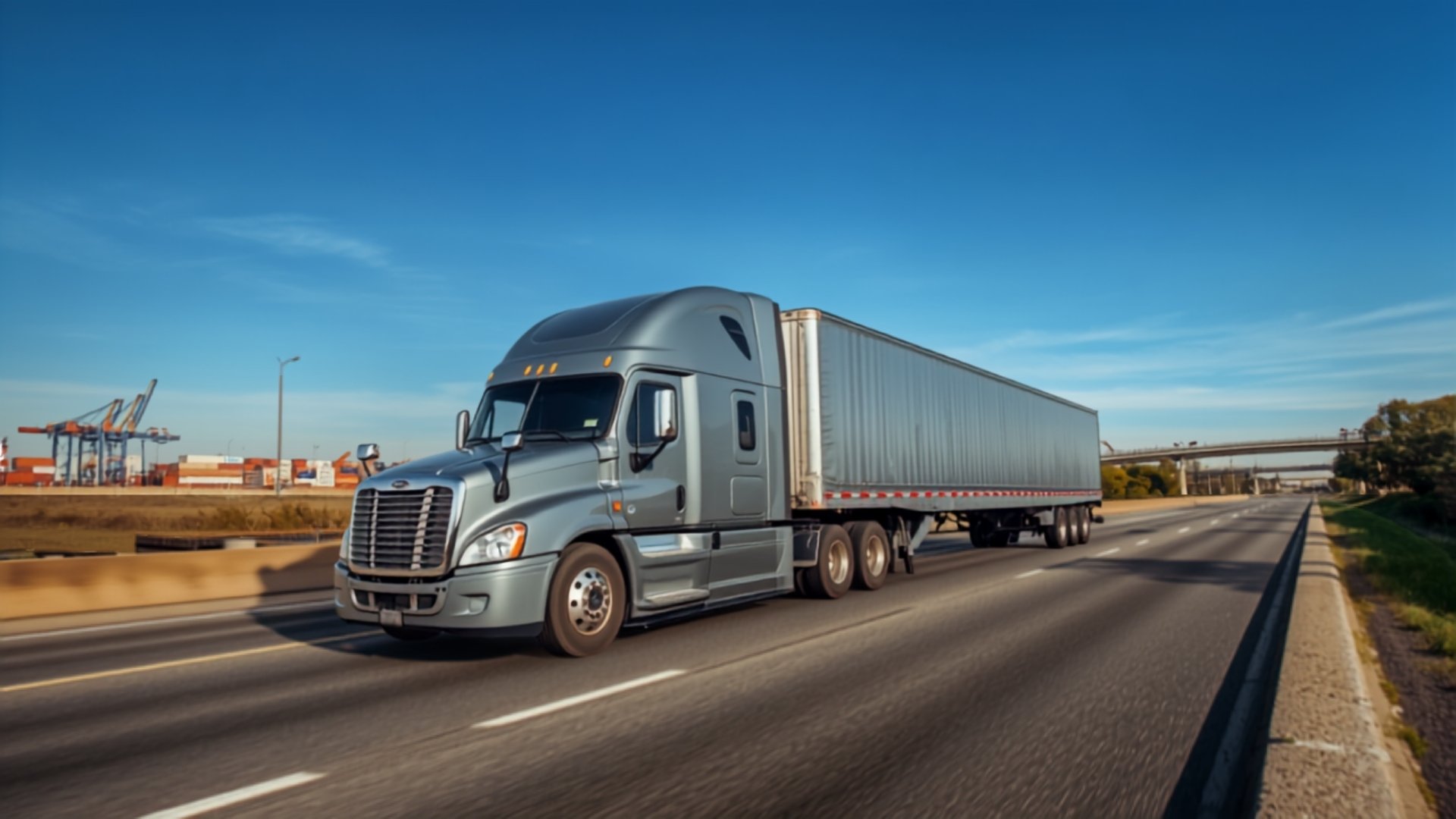
Yes, in most cases. A Harris County truck accident lawyer can hold a Texas trucking company liable when its driver was an employee acting within the scope of the job. Federal rules treat many owner-operators the same way. Chapter 72 of the Civil Practice and Remedies Code then shapes how that claim is tried.
Lassiter Law Firm represents people hurt in commercial truck crashes across Harris County and greater Houston. Founder James Lassiter is Board Certified in Personal Injury Trial Law by the Texas Board of Legal Specialization. The firm has recovered over $300 million for injured clients. This page explains when the company behind the truck pays and what Texas law changed about proving it.
If an 18-wheeler hit you anywhere in Harris County, call Lassiter Law Firm at (832) 937-4381 for a free consultation. The office is open 24 hours a day, 7 days a week.
When a Texas Trucking Company Pays for Its Driver’s Mistake
The Houston truck accident attorneys at Lassiter Law Firm hear the same worry in almost every first call. The driver has a small personal policy, and the injuries are large. The answer usually sits with the company whose name is on the door. Texas calls this respondeat superior, and it makes an employer answer for an employee’s negligence on the job.
Two facts carry the claim. The driver has to be the company’s employee, and the driver has to be acting within the scope of that job when the crash happens. Trucking companies fight both points. They call drivers independent contractors, and they call a trip personal. Federal regulations and Texas case law close off much of that argument.
Employee or Independent Contractor
Many trucks on Harris County roads are driven by owner-operators. These drivers own or lease their tractor and haul under another company’s operating authority. A carrier often points to a contract calling the driver an independent contractor. That label rarely ends the question for an interstate carrier. Two federal rules explain why the carrier still answers for the load. Both apply before any Texas statute enters the picture.
The Federal Definition Reaches Owner-Operators
Title 49 of the Code of Federal Regulations, section 390.5, defines who counts as an employee under the federal motor carrier safety rules. The definition names a commercial motor vehicle driver. It expressly includes an independent contractor while operating a commercial motor vehicle. Chapter 72 adopts a broad definition too, reaching any person deemed an employee under state or federal law.
Leased Trucks and the Carrier’s Exclusive Control
Federal leasing rule 49 C.F.R. section 376.12(c)(1) governs trucks that a carrier leases from an owner-operator. The lease must give the carrier exclusive possession, control, and use of the equipment. It must also say the carrier assumes complete responsibility for operating it. That language is written into the paperwork, so ask for the lease early.
Acting Within the Scope of the Job
The second fact is scope. The Texas Supreme Court restated the test in Painter v. Amerimex Drilling I, Ltd., decided April 13, 2018. The driver’s conduct has to be of the same general nature as the work the employer authorized, or incidental to it. A driver hauling a container toward a delivery fits easily. A driver running a personal errand in the company truck on a day off is harder.
A Company Truck Creates a Presumption
Texas gives injured people a head start in one common situation. In Robertson Tank Lines v. Van Cleave, the Texas Supreme Court held that ownership of the truck plus the driver’s employment raises a presumption of scope. The company then has to produce positive evidence that the driver was off the job. Once it does, the presumption drops away and you need other proof.
Where Scope Fights Start in Harris County
Scope disputes tend to follow the trip, not the crash. A drayage driver leaving the Bayport Container Terminal off Port Road is plainly working. A driver who takes the company truck to a family dinner after his shift may not be. Dispatch logs and pay records usually settle it. The investigation section below covers how to get them.
What Chapter 72 Changed for a Harris County Truck Accident Lawyer
House Bill 19 of the 87th Legislature took effect September 1, 2021. It added Subchapter B to Chapter 72 of the Texas Civil Practice and Remedies Code, which governs injury claims after a commercial motor vehicle collision. House Bill 2190 amended parts of it in 2023. Any Harris County truck accident lawyer now builds the case around these sections from the first day.
The law does not cap damages, and it does not bar suing the company. It changes the order of proof. It also limits some evidence about the employer’s hiring and safety record. Knowing those limits early decides which claims to plead and which records to chase.
The Two-Phase Trial Under Section 72.052
Section 72.052 requires the court to split the trial when a defendant asks. The motion is not automatic, and the defendant has to file it on time. Most trucking defendants file it. The split separates compensatory damages from exemplary damages, the Texas term for punitive damages. That changes what a Harris County jury hears first and what it hears only later. Plan the evidence for each phase from the start.
The 120-Day Motion Window
A defendant must move for a split trial by the later of two dates. The first is the 120th day after it files its original answer. The second is the 30th day after you add a new claim against it. A defendant that misses both dates loses the right to demand the split.
What Each Phase Decides
The jury decides liability and compensatory damages in the first phase. Exemplary damages wait for the second phase. Section 72.052(e) lets a finding that the driver was negligent carry over into that second phase. That keeps a claim like negligent entrustment alive against the employer.
The Employer Stipulation Under Section 72.054
Section 72.054 gives the trucking company a choice. It can stipulate that the driver was its employee and acting within the scope of employment. The deadline is the same window as the motion to split the trial. If it does, its liability for the driver’s ordinary negligence rests on respondeat superior alone. The stipulation concedes that the company pays, and in exchange it keeps certain evidence out of phase one.
Negligent Entrustment Evidence That Still Comes In
The stipulation does not wipe out every fact about the company. Section 72.054(c) lists specific evidence a party may still offer in phase one against a federally or Texas regulated carrier. That evidence may prove only ordinary negligent entrustment. It is also the only evidence you may offer on that claim in phase one.
Facts About the Driver
The list covers whether the driver held a valid license for the truck. It covers disqualification under 49 C.F.R. section 391.15 and any out-of-service order. It includes the medical certificate required by section 391.41. Texting or using a handheld phone in violation of section 392.80 or 392.82 is on the list as well.
Facts About the Employer
The employer’s side covers whether it let the driver work in violation of the hours-of-service rules in section 395.3. It also covers the background checks under section 391.23 for a driver hired within the past year. Drug testing under section 382.301 counts when the driver was impaired and had worked there 180 days or less.
Claims the Stipulation Does Not Touch
Section 72.054(f) preserves two paths. A claim like negligent maintenance does not depend on the driver’s negligence, so it stays in phase one. A claim for exemplary damages under Chapter 41 stays available in phase two. Worn brakes on a tractor serving the Barbours Cut terminal are a company failure, not only a driver failure.
Photos and Video Under Section 72.055
Truck defendants used to fight crash photographs with expert testimony. Section 72.055 stops that. A court may not require an expert to admit a photo or video of a vehicle involved in the crash, beyond what authentication needs. A properly authenticated image is presumed admissible, even when it shows how bad the damage was. Take pictures at the scene if you can do it safely.
Who Else Can Share the Blame in a Harris County Truck Crash
The driver and the carrier are rarely the only defendants worth naming. A Harris County personal injury attorney looks at everyone who touched the truck or its load. Port Houston’s container terminals, the Ship Channel plants, and warehouse districts near Beltway 8 put many companies on a single trip.
Chapter 33 of the Civil Practice and Remedies Code controls how blame is split. The jury assigns a percentage to each responsible party. Your recovery is reduced by your own share, and it is barred only if your share is greater than 50%. Who else sits on that verdict form matters a great deal.
Shippers, Loaders, and Maintenance Shops
A load that shifts on a curve can point to whoever packed it. A trailer with a failed brake can point to the shop that last serviced it. Each is a separate company with its own insurance. Naming them early prevents the carrier from blaming an absent party that you never sued. Section 33.004 lets a defendant designate a responsible third party, and that party can still take a share of the fault.
How Texas Divides Payment Among Defendants
Section 33.013 generally makes each defendant pay only its own percentage. The exception matters in truck cases. A defendant found more than 50% responsible becomes jointly and severally liable for the whole recoverable amount. A trucking company over that line can be made to pay the full judgment. A small defendant under the line pays only its share. That is why the carrier’s percentage often matters more than the total number of defendants.
How Much Insurance Stands Behind a Commercial Truck
The size of the policy often decides the size of the recovery. Federal and Texas rules set floors, not ceilings, and many carriers buy more. Knowing the floor tells you what money is almost certainly there. The carrier’s filings with the federal and state agencies confirm the actual coverage.
The type of cargo drives the number. So does whether the truck crossed state lines. A tanker working the Houston Ship Channel plants carries a very different floor than a local box truck. Your own underinsured motorist coverage can add to whatever the carrier’s policy pays.
Interstate Carriers Hauling General Freight
Under 49 C.F.R. section 387.9, a for-hire carrier moving nonhazardous property in interstate commerce needs at least $750,000 in public liability coverage. The rule applies to vehicles rated at 10,001 pounds or more. It covers the long-haul tractor-trailers that cross state lines on Interstate 10 and Interstate 45. A carrier can buy more, and its filings show the actual limit.
Hazardous Cargo and Texas-Only Carriers
Section 387.9 raises the floor for hazardous cargo. Certain bulk hazardous substances require $5,000,000, and oil and other listed hazardous materials require $1,000,000. Carriers that operate only inside Texas register with the Texas Department of Motor Vehicles under Transportation Code Chapter 643. Title 43, section 218.16 of the Texas Administrative Code sets their minimums. Section 643.101 generally keeps the state amounts at or below the federal level.
Who Investigates a Truck Crash in Harris County
The agency that responds depends on where the truck hit you. Harris County holds the City of Houston, other cities, and large unincorporated areas. Each one sends a different agency. The report that agency writes becomes the first document every adjuster reads. Knowing which agency responded tells you where to request it.
Texas officers record crashes on form CR-3. A copy costs $6 through the Texas Department of Transportation, with $2 more for certification. The report includes carrier identification for a commercial vehicle, which is how the investigation finds the company.
Inside Houston City Limits
The Houston Police Department takes most crashes inside the city. Its Vehicular Crimes Division investigates fatal and catastrophic crashes and runs a Crash Reconstruction unit. A serious 18-wheeler crash on the North Loop or the Southwest Freeway can bring that division to the scene. If a family member died, our Houston fatal truck accident attorneys can review the reconstruction file. Ask for the reconstruction report by name.
Unincorporated Harris County
Outside city limits, the Harris County Sheriff’s Office handles many crashes. It takes crash report requests through an online public records center. Constable precincts work crashes as well, and Precinct 4 runs its own Accident Investigation Section. The Texas Department of Public Safety also enforces commercial vehicle rules on area highways. A crash near Atascocita or Cypress may involve any of these agencies. The report header names the one that responded.
What the 2024 TxDOT Numbers Show
The Texas Department of Transportation reports crashes involving commercial motor vehicles by county. Its 2024 county table lists 6,313 such crashes in Harris County. Forty-one of them were fatal crashes, and 41 people died. Another 112 people suffered suspected serious injuries. The same table counts 4,553 commercial vehicle crashes with no reported injury. Those figures cover every kind of commercial vehicle, not only 18-wheelers.
What Evidence Proves the Driver Was on the Clock
Scope is proved with records, and trucking companies control most of them. Some are kept only for months. A company that receives a written preservation demand early has a harder time explaining a gap later. That letter should go out within days of the crash.
The Texas Supreme Court set the spoliation rules in Brookshire Bros. v. Aldridge in 2014. A jury instruction for destroyed evidence generally requires intentional destruction. A narrow exception covers negligent loss that leaves a party without any way to prove its case. Early notice makes that argument much stronger.
Electronic Logging Device Data
Most interstate trucks record driving time on an electronic logging device. That data shows when the driver was on duty and how long the truck moved. It tests compliance with the 11-hour driving limit in 49 C.F.R. section 395.3. An FMCSA rule effective July 22, 2026, removed the requirement to keep the device’s user manual in the cab. A missing manual is no longer a violation to chase.
Dispatch, Load, and Pay Records
Dispatch messages show where the company sent the truck. Bills of lading show what it carried and for whom. Pay records show whether the driver was earning on that trip. Together these usually answer the scope question before anyone reaches a courtroom. Fuel receipts and Harris County Toll Road Authority toll records can confirm the route. Ask for them by date and vehicle.
Where a Harris County Truck Case Is Filed and How Long You Have
Civil Practice and Remedies Code section 15.002 generally places venue where a substantial part of the events happened. A crash on the Katy Freeway inside Harris County usually means the Harris County Civil Courthouse at 201 Caroline Street. The county has 24 civil district courts. Local Rule 3.1 assigns each new case to one of them at random.
Section 16.003 gives you two years from the crash to file a personal injury suit. A death claim runs two years from the date of death. Our post on the truck accident filing deadline in Fort Bend County covers the same rule next door. Serious injuries often go first to Ben Taub Hospital or Memorial Hermann in the Texas Medical Center, the county’s two adult Level I trauma centers.
Questions About Suing a Trucking Company in Harris County
These questions come up in nearly every consultation after an 18-wheeler crash. Each answer names the Texas or federal rule behind it. Your own facts still control the result. Bring the crash report and any photos when you meet with a lawyer. A short list of questions helps too.
Can I Sue Both the Truck Driver and the Trucking Company in Texas?
Yes. Texas law allows claims against the driver and the employer in the same suit. If the company stipulates under section 72.054, the claim against it for the driver’s ordinary negligence runs through respondeat superior.
What If the Truck Driver Was Drunk or on Drugs?
Impairment supports a claim for exemplary damages in the second phase of a split trial. A company that skipped required drug testing may face its own negligence claim. Our Houston drunk driving accident attorneys handle impaired driver claims.
Does Chapter 72 Cap How Much I Can Recover?
No. Chapter 72 changes how the trial runs and what evidence comes in during each phase. It does not set a dollar cap on compensatory damages in a truck case.
What If the Trucking Company Says the Driver Was Off Duty?
The company then has to back that up with positive evidence. Logging device data, dispatch messages, and pay records usually show whether the driver was working. Those records are why a preservation letter matters.
What If I Was Partly at Fault for the Truck Crash?
You can still recover if your share is 50% or less. Chapter 33 reduces your award by your percentage. A share greater than 50% bars recovery.
Talk to a Harris County Truck Accident Lawyer About the Company Behind the Truck
A trucking company that put an unsafe driver on the road should not hide behind a contractor label or a split trial. A Harris County truck accident lawyer can identify every company tied to the truck and push for the full coverage behind it.
Lassiter Law Firm has recovered over $300 million for injured clients across greater Houston. You can review the firm’s case results, including a $650,000 recovery in an 18-wheeler case. Past results do not guarantee a future outcome.
Call Lassiter Law Firm at (832) 937-4381 for a free consultation. The office answers 24 hours a day, and reviewing your crash report costs nothing.
You can also reach the firm through the contact page. Bring the CR-3 report, the carrier name on the truck, and any photos of the scene.